
Trauma on the Farm
From tractors, to grain bins, to burns…
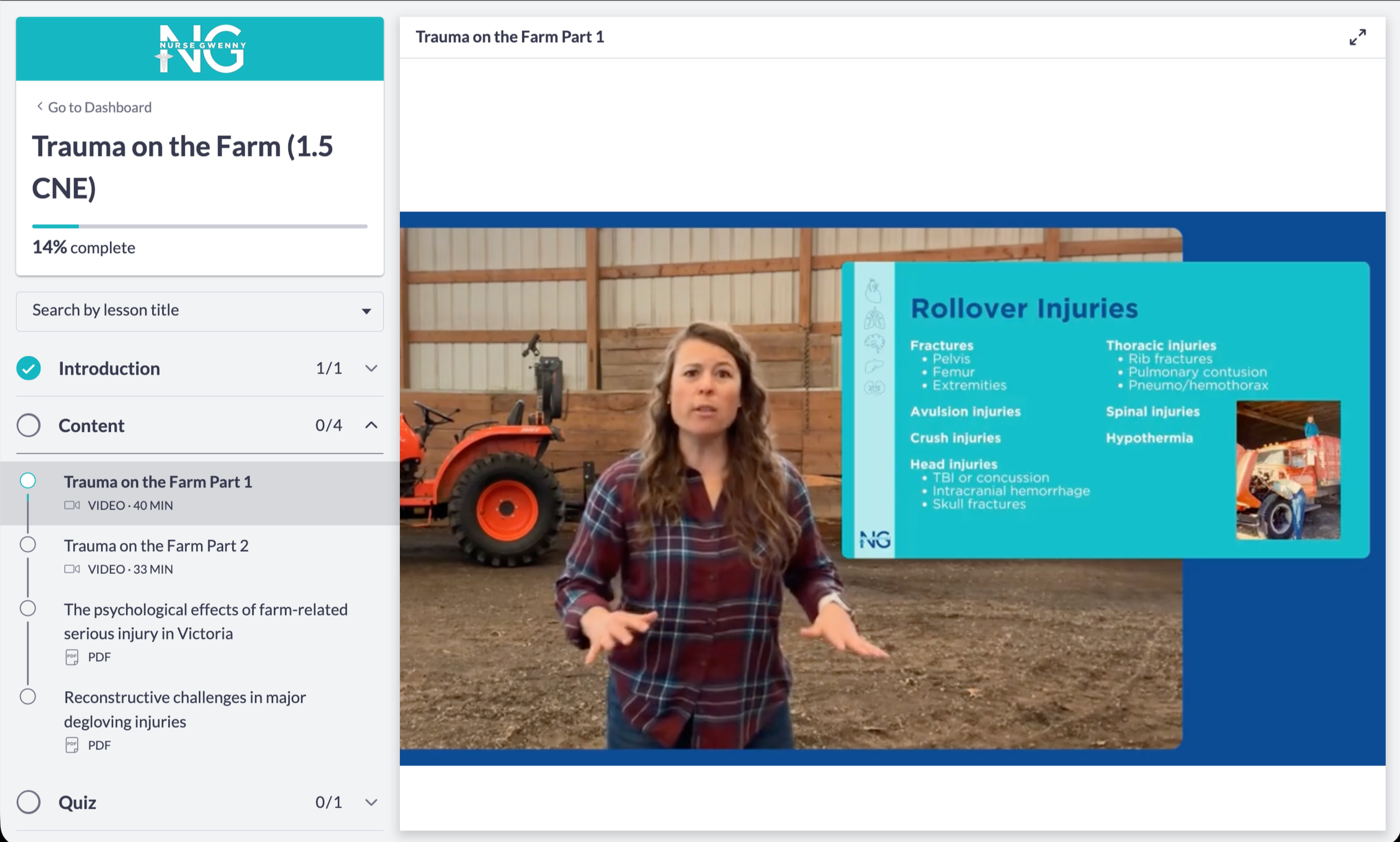
Click the image above to preview of Trauma on the Farm, a 1.5 CNE course found in The Nurse Gwenny Library
Nurse Gwenny provides a farm fresh take on Agricultural Trauma.
This course is 1.5 CNE and can be found in The Nurse Gwenny Library.
Nurse Gwenny introduces a rural-focused lesson on agricultural related trauma. This course includes a few stories from Gwenny’s early days where she grew up on a farm and helped her Dad who raised cattle and row crop in Southern Illinois.
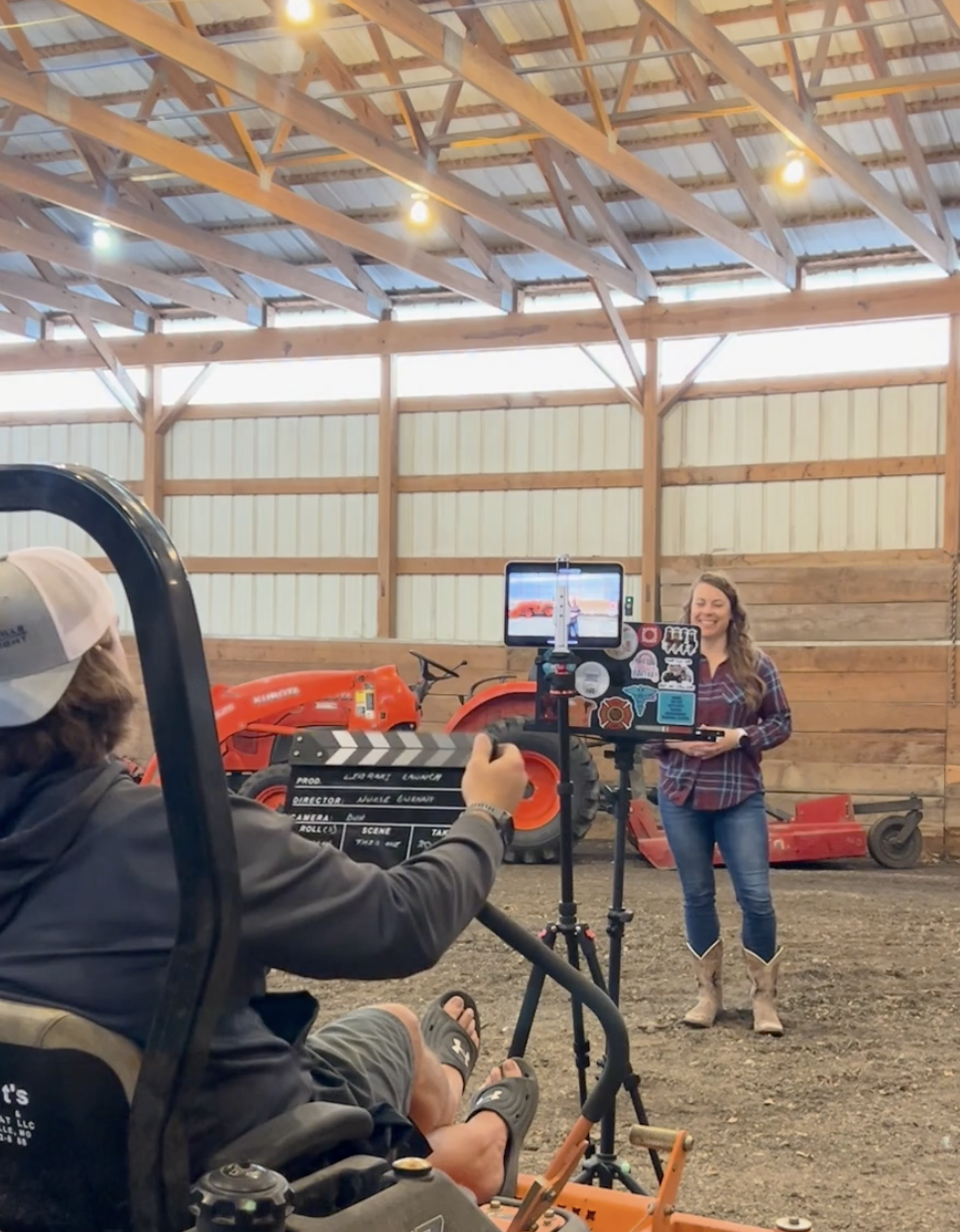
Behind the scenes!!!
This course was filmed in Mr. Nurse Gwenny’s barn, a former horse arena turned landscape warehouse. Can’t get much more farm fresh than that!
The learning objectives for the Trauma on the Farm course include:
Identify common mechanisms and injury patterns associated with agricultural trauma
Recognize pathophysiologic complications unique to farm-related injuries, including crush syndrome, traumatic asphyxia, hemorrhagic shock, and toxic exposures
Apply evidence-based stabilization, extrication, and transport priorities for patients injured in agricultural environments, with consideration for rural resource constraints
Enjoying this article?
Sign up for The Nurse Gwenny Library and continue your studies!
(Save $$$ by using Coupon Code “MrNurseGwenny” at checkout.)
Trauma on the Farm Overview Continued:
Nurse Gwenny outlines injury mechanisms, complications, and rural stabilization/extrication priorities to start off the two part lecture. She emphasizes tractor rollovers as 40–50% of ag fatalities (~120 U.S. deaths/year), notes Rollover Protection Systems, and reviews common injury clusters including orthopedic trauma (notably pelvic and femur fractures), head, thoracic, spinal injuries, crush/avulsion injuries, and hypothermia. For pelvic fractures she explains major bleeding sources, poor accuracy and potential harm from pelvic palpation, mixed evidence on pelvic binders (and correct low placement with ankle binding), and describes REBOA as a temporizing hemorrhage-control tool used in advanced systems.
She covers degloving/avulsion morbidity, contamination and tetanus risk, crush syndrome complications including rhabdomyolysis, hyperkalemia recognition/treatment, and compartment syndrome signs and fasciotomy urgency.
The first video ends with grain bin/auger hazards and an interview describing Grain Bin Safety Week and features Dan Neenan of NECASAG.org as he talks through rescue tube training, and broader agricultural safety simulations.
The second part follows flight nurse “Nurse Gwenny” describing her own experience participating in a grain-bin entrapment rescue demo at the GEAPS, grain bin expo.
Nurse Gwenny goes on to explain grain asphyxiation mechanisms seen in autopsies, shares that her real responses have been recoveries, and reviews other agricultural injuries including chemical pneumonitis from inhaled particulates and burns from controlled burns, emphasizing burn-center transport thresholds, revised Baux scoring, updated fluid strategies to avoid over-resuscitation, urine-output goals, and the need for aggressive but safe pain control.
She outlines burn complications, iatrogenic infection risks, and the importance of early sterile technique, then discusses psychological impacts of farm injuries.
The course concludes with a touch of humanity as Nurse Gwenny interviews Stacy, whose untrained 19-year-old son died in a silo auger incident. The two discuss safety failures, misinformation, and how faith and advocacy helped her cope.
These course and others are exclusive found in The Nurse Gwenny Library.
Wanna check out a course for free and see if it matches your learning style? Click on the image below to access Trauma Triads!
Trauma Triads a free course in The Nurse Gwenny Library
