
The Nurse Gwenny Podcast Episode 10
Response Calls That Never Should Have Happened with Sarah Lorenzini
TheRapidResponseRN
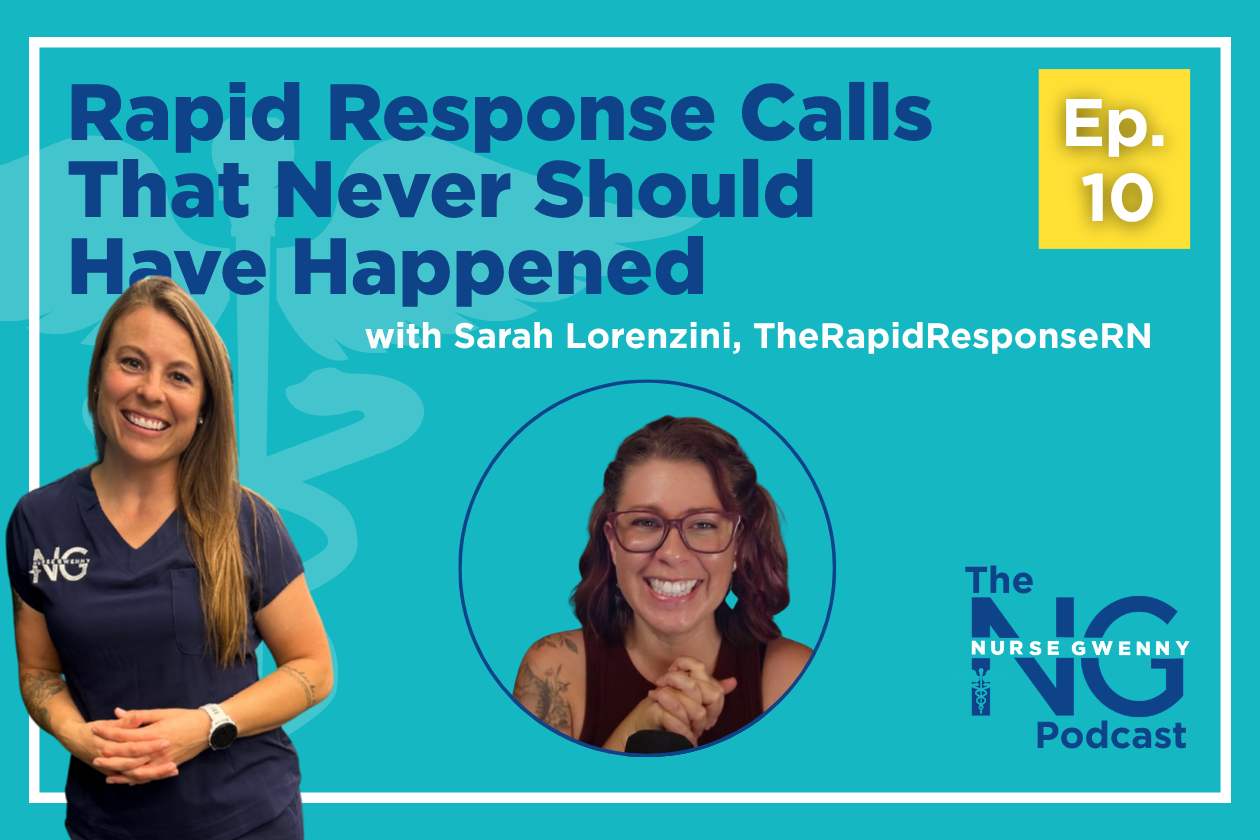
Click the image above to view “Rapid Response Calls That Never Should Have Happened”
This podcast can be found in The Nurse Gwenny Library, through major podcast platforms like Spotify and by video on youtube.
On the Nurse Gwenny Podcast
Every rapid response call tells a story.
Sometimes it's the story of a patient whose condition changed suddenly despite everyone's best efforts. Other times, it's the story of subtle warning signs that were present long before the emergency; however, they went unrecognized or unaddressed.
In a recent episode of the Nurse Gwenny Podcast, we sat down with TheRapidResponseR, Sarah Lorenzini, to discuss one of the most important conversations in bedside healthcare: rapid response calls that may have been preventable.
Rapid Response: The Hospital's Emergency Lifeline
A rapid response call is essentially the hospital's version of dialing 911. It's designed to bring critical care expertise to the bedside when a hospitalized patient's condition begins to deteriorate.
These teams save lives every day.
But Sarah shared an important perspective: many rapid response activations aren't caused by a sudden, unpredictable event. Instead, they're often the result of warning signs that appeared hours earlier. These changes, if recognized and acted upon, may have prevented the crisis altogether.
That's not about assigning blame. It's about creating opportunities to learn, improve, and provide safer care.

Nurse Gwenny’s Certification Test Prep for the Emergency Nurse (CEN TEST PREP!)
The Clues Are Usually There
One of the biggest takeaways from our conversation was the importance of early recognition.
Patient deterioration rarely happens without warning. Changes in vital signs, mental status, skin color, respiratory effort, urine output, or even a patient's behavior can all provide valuable clues that something isn't right.
Sarah Lorenzini encouraged healthcare professionals to trust their clinical instincts.
If something feels different about a patient, don't dismiss that feeling. Investigate. Ask questions. Reassess. Escalate concerns when appropriate.
As clinicians, it's easy to become focused on completing tasks and documenting care. But great patient care requires us to step back and see the whole person—not just the numbers on the monitor or the boxes on the chart.
Every Team Member Has a Voice
Another powerful theme from the episode was teamwork.
Patient care technicians, nursing assistants, respiratory therapists, environmental services staff, and countless others spend significant time with patients throughout the day. Because of these frequent interactions, they're often the first to notice subtle changes.
Maybe a patient who was talkative this morning is suddenly quiet.
Maybe someone who walked independently now struggles to get out of bed.
Maybe a family member mentions that "something just isn't right."
These observations matter.
Creating a culture where every team member feels comfortable speaking up can make the difference between early intervention and a rapid response call.
Healthcare works best when everyone is empowered to advocate for the patient.
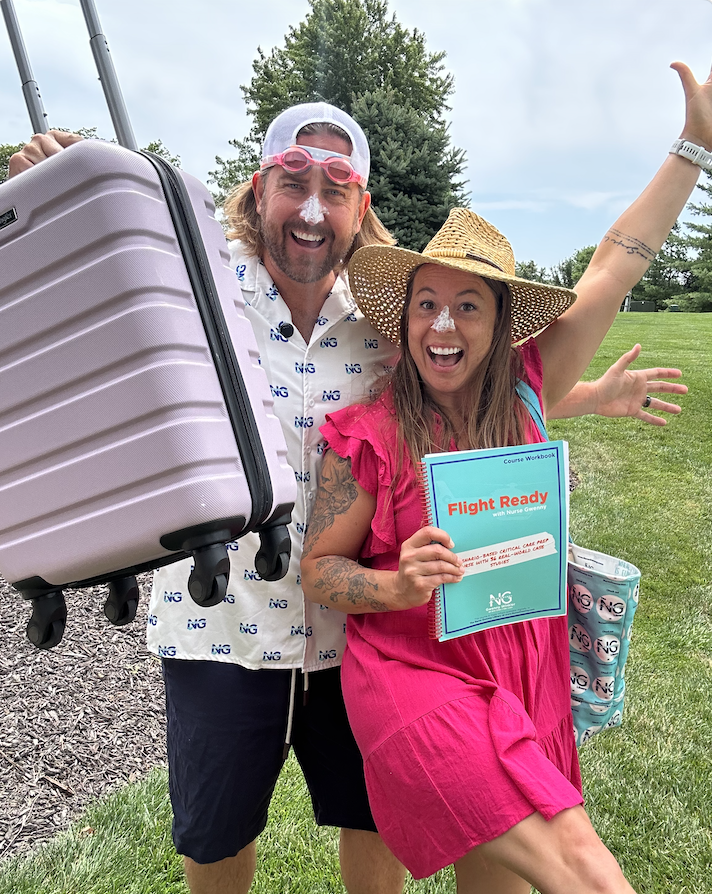
Summer Vacation?
…join us in near Tampa Bay, August 2026 for an
In-Person Flight Ready Class with Nurse Gwenny!
Continuous Learning Improves Patient Outcomes
No nurse, paramedic, or EMT ever stops learning.
Each patient encounter offers new lessons, and every difficult case presents an opportunity to grow.
Sarah's experiences as a rapid response nurse remind us that clinical excellence isn't just about responding to emergencies. It also includes looking for ways to recognizing them before they happen whenever possible.
By sharpening our assessment skills, strengthening communication, and working together as a team, we can improve patient outcomes while reducing preventable emergencies.
Keep Building Your Clinical Confidence
If you're passionate about becoming a stronger clinician, the Nurse Gwenny Library is designed to help you continue growing. With continuing education, practical case studies, and real-world clinical discussions, it's a resource created for nurses, paramedics, and EMTs who want to build confidence and provide exceptional patient care.
Because the best rapid response is often the one that never has to happen.
Listen to the full Nurse Gwenny Podcast episode with Sarah Lorenzini to hear real stories, practical insights, and clinical pearls that can help you recognize patient deterioration earlier and become an even stronger advocate for your patients.
Find more of Sarah Lorenzini’s work
on TheRapidResponseRN website HERE.
There you can find courses, media, and the Rapid Response Academy!!!
Rapid Response Academy: The Heart and Science of Caring for the Sick
A community for nurses who want the knowledge, skills, and confidence to respond to any emergency
Members receive weekly live trainings, access to a community of like minded nurses, and personalized support on their journey as a Nurse. for rapid response nursing
Take a listen to Nurse Gwenny Podcasts on Spotify or subscribe to Nurse Gwenny youtube account to listen and watch!
Several future episodes will provide CEs for subscribers to the Nurse Gwenny Library. So, if you haven’t, stop by The Nurse Gwenny Library be sure to check it out and subscribe!
Hear more from your favorite critical care educator, Nurse Gwenny by accessing the full podcast episode.
Sign up for The Nurse Gwenny Library for even more awesome content.
(Save $$$ by using Coupon Code “MrNurseGwenny” at checkout.)
Wanna check out a course for free from Sarah Lorenzini to see if it matches your learning style? Click on the image below to access Are Nursing Care Plans a Waste of Time?

Are Nursing Care Plans a Waste of Time? A free course in The Nurse Gwenny Library
